Schools are under growing pressure to manage student phone use in a way that protects learning without turning every lesson into a confrontation. Teachers need classrooms that feel focused and orderly, students need clear boundaries, and parents want confidence that devices are safe during the day. A washable lockable phone pouch offers a practical middle ground. Rather than relying on repeated reminders, inconsistent confiscation, or ad hoc desk collections, schools can use a simple system that reduces visible distraction while keeping each student responsible for their own device.
What makes this approach especially compelling is that it addresses more than one problem at once. A well-designed lockable phone pouch supports attention, lowers friction between staff and students, helps maintain a consistent policy across classrooms, and stands up to repeated daily use. When the pouch is washable, it also becomes easier to maintain hygiene and preserve a neat, professional standard across the school environment.
Why schools are turning to the lockable phone pouch model
Most school phone policies struggle for the same reason: they depend too heavily on constant enforcement. If one teacher allows phones during transitions, another bans them entirely, and a third only intervenes when a problem arises, students quickly learn that the rules are negotiable. That inconsistency creates tension and chips away at classroom authority.
A lockable phone pouch changes the dynamic by making the expectation visible and routine. Students keep possession of their phones, but access is restricted during the school day or during specific periods such as lessons, exams, assemblies, or study sessions. This matters because the system feels structured rather than personal. The phone is not being taken away by a teacher in the heat of the moment; it is being placed in a standard pouch under a known school rule.
That distinction can reduce arguments and make enforcement feel fairer. It also supports a healthier classroom atmosphere. When phones are out of sight and unavailable, teachers are less likely to compete with notifications, messaging, or quick glances at screens. Students, in turn, can settle more fully into discussion, reading, practical work, and face-to-face interaction.
For schools reviewing options, a thoughtfully made Lockable phone pouch can serve as a durable policy tool rather than a short-term workaround.
Why washability matters more than many schools expect
It is easy to focus on the locking feature and overlook the value of washability, but in a school setting, that detail matters. Phone pouches are handled daily by large numbers of students, moved between classrooms, stored in bags, placed on desks, and used in all kinds of weather and routines. Over time, any shared or repeatedly used item can begin to look worn, marked, or unhygienic if it cannot be cleaned properly.
A washable pouch helps schools maintain a cleaner and more presentable system. This is especially important for younger students, high-turnover timetables, and environments where pouches may be issued repeatedly across terms or year groups. A pouch that can be cleaned with ease is better suited to the realities of school life than one that simply looks good when new.
Washability also supports longevity. Dirt buildup, spills, and everyday handling can shorten the useful life of lower-quality materials. By contrast, a washable lockable phone pouch is easier to keep in circulation, easier to inspect, and more likely to remain suitable for routine student use. For administrators, that translates into a solution that feels more sustainable and better aligned with operational standards.
- Cleaner daily handling: easier upkeep across classrooms and year groups.
- More professional appearance: pouches stay presentable instead of looking tired or neglected.
- Better long-term value: maintainable materials are more practical for repeated use.
- Stronger hygiene standards: especially useful in busy shared environments.
Practical benefits for learning, behaviour, and school culture
The strongest case for washable lockable phone pouches is not just about preventing disruption. It is about shaping the environment students experience throughout the day. When a school reduces the constant pull of phones, it creates more room for concentration, participation, and social connection.
In the classroom, this often means fewer small interruptions. A student does not have to be openly texting for a phone to affect attention; even the possibility of checking it can divide focus. Removing that temptation makes it easier for students to stay with the task in front of them, especially during reading, writing, problem-solving, and assessment conditions.
There are also behavioural advantages. Because the pouch system applies broadly, teachers spend less time making individual judgments in the moment. That can reduce friction, preserve staff energy, and make consequences feel less arbitrary. Students know the expectation before entering the room, which often leads to smoother starts and clearer routines.
Beyond academics, schools may value the social effect. Breaks and transitions can become less dominated by screens when phones remain secured for part or all of the day. That creates more space for conversation, play, and direct interaction. While no single policy solves every issue related to student wellbeing, a lockable phone pouch can support a calmer, more intentional school culture.
| School Need | How a Washable Lockable Phone Pouch Helps |
|---|---|
| Reduce classroom distraction | Keeps devices inaccessible during lessons without removing student ownership. |
| Create policy consistency | Provides one visible system staff can apply across subjects and year levels. |
| Protect student devices | Stores phones securely instead of leaving them loose in bags or on desks. |
| Maintain hygiene and presentation | Washable materials allow regular cleaning and better long-term appearance. |
| Lower staff-student conflict | Turns phone management into a routine process rather than a repeated argument. |
What schools should look for before choosing a pouch system
Not every pouch is suitable for day-to-day school use. Decision-makers should think beyond the basic idea and focus on whether the product will hold up under repeated handling, fit a wide range of devices, and work smoothly within existing school routines.
Key features to assess include:
- Reliable locking mechanism: it should be secure enough for daily enforcement but straightforward for authorised unlocking points or staff procedures.
- Washable, durable materials: the pouch should tolerate regular cleaning without losing structure or function.
- Appropriate device fit: students use different phone sizes, often with protective cases.
- Clear identification or labelling options: this helps with organisation during collection, storage, or event-based use.
- Comfort and portability: students should be able to carry the pouch easily during the school day.
Schools may also prefer providers that understand education settings rather than treating the pouch as a generic accessory. Products such as Win Elements | Safe Pouch Lockable Phone Pouch fit naturally into this conversation because schools often need something practical, durable, and easy to integrate into policy, not simply a novelty solution.
How to implement the system successfully
Even the best pouch will work poorly if the rollout is unclear. Successful implementation depends on communication, routine, and consistency. Students should understand when the pouch must be locked, when access is allowed, and what happens in emergencies or approved exceptions. Staff should receive the same guidance so the process does not vary from room to room.
A sensible rollout often includes:
- A clear written policy shared with staff, students, and families.
- A short training period so teachers and administrators can practise the routine.
- Defined unlocking points or times to avoid confusion at dismissal or during approved use.
- Year-level or campus-specific procedures where needed for age differences or timetable structure.
It is also worth framing the system carefully. Schools tend to get better buy-in when the pouch is presented as a support for learning and respectful boundaries, rather than as a punishment. Students are more likely to accept rules that feel predictable, fair, and broadly applied. Parents, likewise, are often reassured when they know the phone stays with the student while remaining unavailable during lessons.
Review matters too. After implementation, schools should gather feedback from staff and monitor practical issues such as durability, cleaning routines, unlocking logistics, and student compliance. Small adjustments early on can make the system far more effective over time.
Conclusion
A washable lockable phone pouch is one of the clearest ways for schools to bring order to phone use without escalating conflict or creating unnecessary complexity. It supports concentration, strengthens consistency, protects devices, and adds a valuable hygiene advantage that many schools only appreciate after day-to-day use begins. Most importantly, it helps create an environment where attention is directed back to teaching, learning, and in-person connection.
For schools seeking a policy tool that is practical rather than punitive, the right lockable phone pouch can become an important part of the wider learning culture. When the design is durable, washable, and easy to manage, it offers a balanced solution that respects both school standards and the realities of student life.
——————-
Visit us for more details: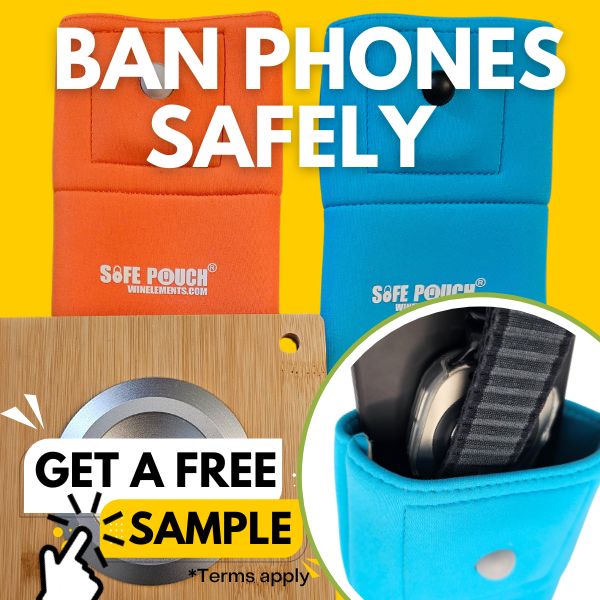
Win Elements | Lockable Phone Pouch
https://www.winelements.com/
Los Angeles, United States
Patented lockable phone pouches with multi-tiered lockers for phone locking pouches.